December 17th: No SurRender?
Peiper’s northern spearhead plunged deep into American lines. Taking American forces by surprise, Peiper overwhelmed unsuspecting lightly held American positions. Peiper’s men, in only the second day of their advance, had already captured hundreds of Americans in their rush to the Meuse River. On December 17th, around midday, a group of a little over a hundred artillery observation men stumbled directly upon the spearhead of Peiper, with the SS easily overwhelming their open positions. The SS disarmed the men near the “Baugnez crossroads” outside of the Belgian town of Malmedy and shuffled them into an open field. The SS men searched the prisoners, taking their watches, rings, cigarettes and even winter clothes. A survivor of the following event, sergeant Henry Zach, described what happened next.
“…they motioned us to a little field over to our right, where they had captured many American soldiers and they were putting them in this little field, south of this roadhouse.”
“Well, they put us in the field, like I say, I judge there must have been a hundred of us. And this Second Lieutenant… his name was Lieutenant Iames (Lloyd A.). He understood German, and he heard them talking and he turned to me and says ‘Zach, they’re going to kill us.’…”
Two German personnel carriers equipped with machine guns turned their guns on the field of POWs:
“…they started firing at us. I was in the last row. When they started firing it took a little while to--anyway, when the bodies, the Americans in front of me started being blown backwards towards me, I thought it was time to hit the ground. But they kept firing long after they thought we were all dead…they left some Nazi soldiers there to guard us…there was nothing to guard anymore, but they stayed there.”’
“Kampfgruppe”
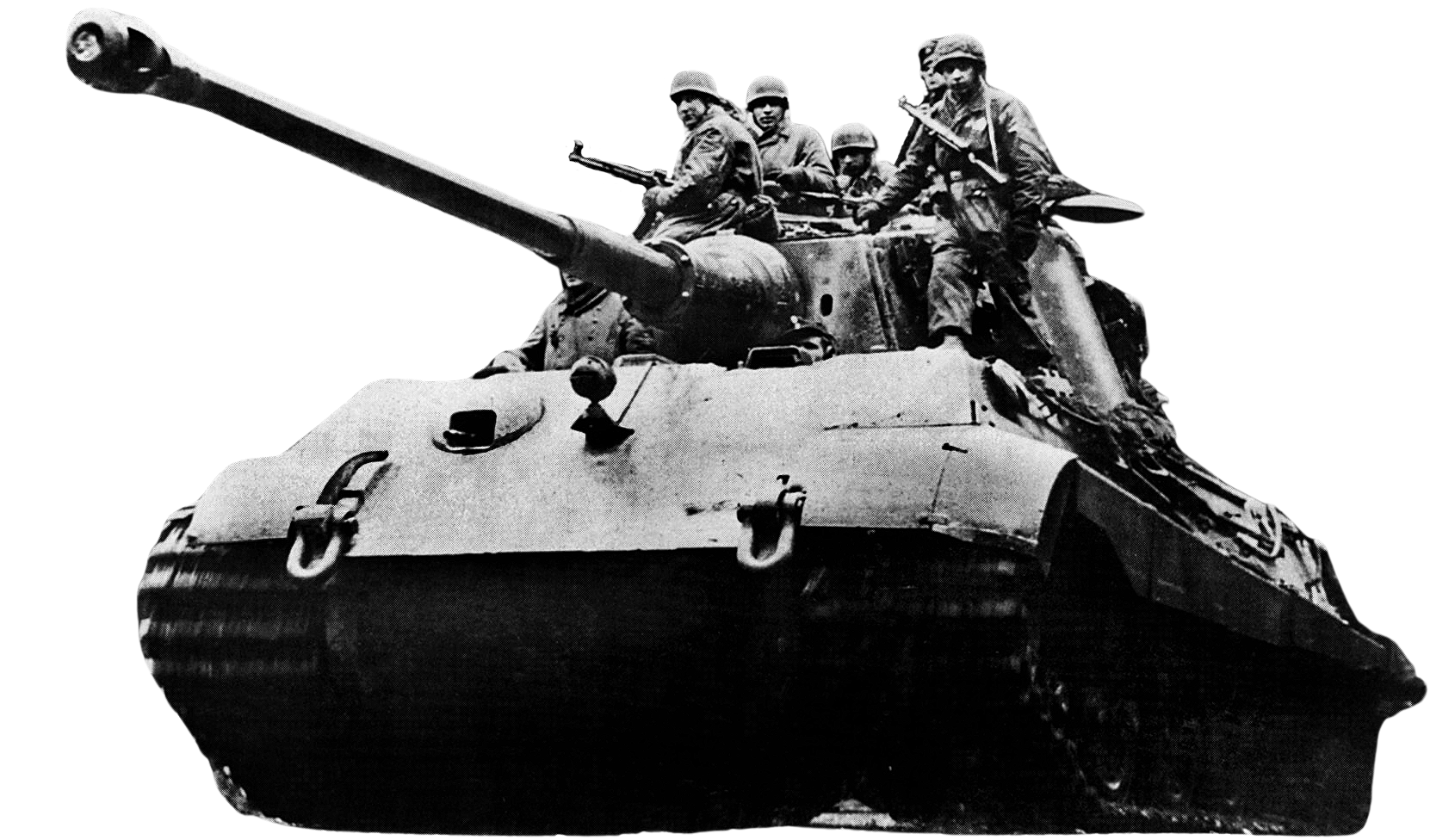
Advancing through the forests of the Belgian Ardennes came an Army organized into Battlegroups or “Kampfgruppen.” During the Offensive in December 1944, German commanders organized their armored divisions into multiple Kampfgruppen, each assigned a distinct mission. The Northern shoulder of the Bulge became infamous as leading the spearhead around the Malmedy-Stavelot area were Kampfgruppen made of Hitler’s elite 1st SS Panzer Division “Leibstandarte SS Adolf Hitler.” Deeply tied to fascist ideology, they served as both a military force and a tool of terror in occupied territories.
Originally a small bodyguard unit for Hitler, the Division grew into a powerful fighting force infamous for brutality. Entire villages—men, women, and children—were often punished collectively. On the Eastern Front, the SS carried out “anti-partisan” and “security” operations, murdering Soviet civilians, especially Jewish communities and political opponents.
Leading a northern spearhead in the Ardennes was Kampfgruppe Peiper, led by Waffen-SS Colonel Joachim Peiper: a committed Nazi and former commander of a 1st SS battalion nicknamed the “Blowtorch Battalion” for its ruthless destruction of Soviet villages during the Eastern campaign. Peiper and his men carried this same brutality into the Ardennes advance, leaving a trail of rape, murder and terror.
December 16th, 1944
On December 16th, 1944, Adolf Hitler launched Germany’s final major Western offensive of World War II. Hundreds of thousands of German troops struck the Belgian Ardennes Forest, attacking a weakly held American front which had been previously used as a resting area and quasi-training area for new “green” troops.
After only a week, the counteroffensive created a pronounced “bulge” in the American lines. German spearheads drove forward in both the north (toward Malmedy and Stavelot) and the south, where fierce fighting began to be centered around Bastogne.
Hitler’s objective was bold: his armies were to cross the Meuse River and push onward to Antwerp, a vital port city. By seizing Antwerp, he hoped to split the British and American forces, disrupting their supply lines and cohesion. Hitler believed such a decisive blow might even force the Western Allies into negotiating a favorable peace settlement.
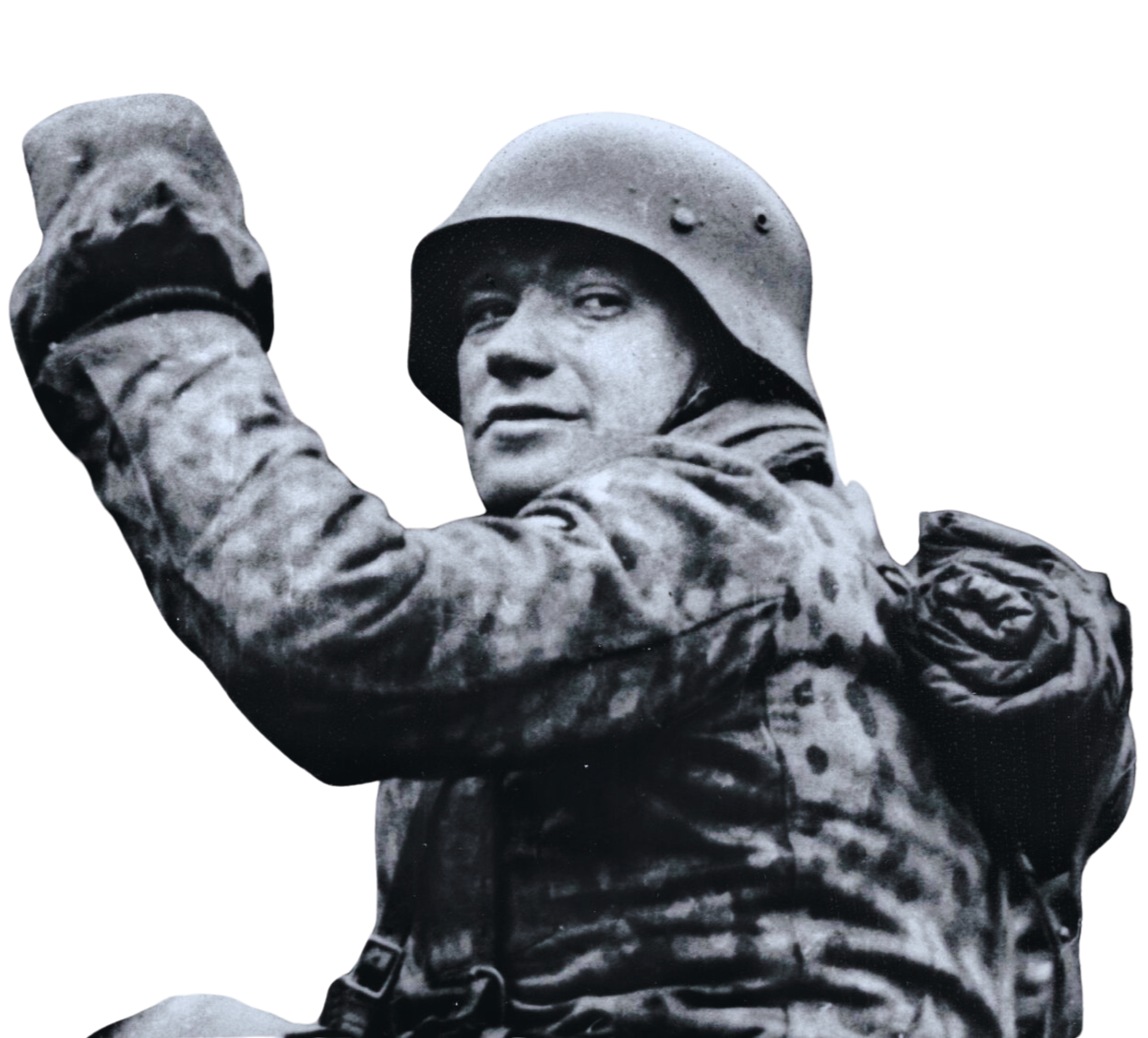
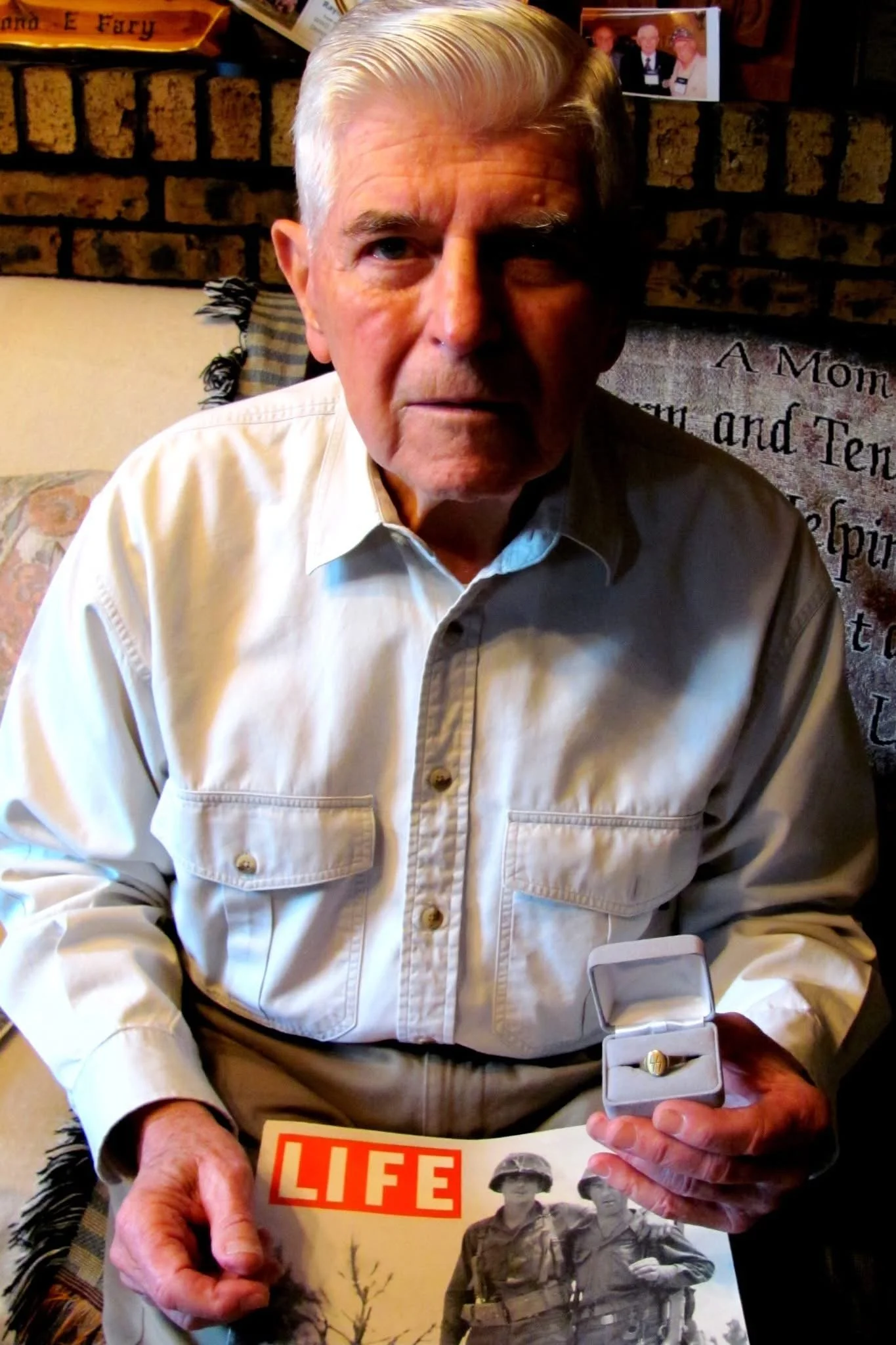
PFC Raymond “Ray” Fary entered the U.S. Army in 1943 and later qualified as a glider soldier with the 82nd Airborne Division's 80th Airborne Anti-Aircraft Battalion. Fighting in the Battle of the Bulge around the Stavelot-Trois Ponts sector, Ray came face to face with Hitler’s 1st and 9th SS divisions.
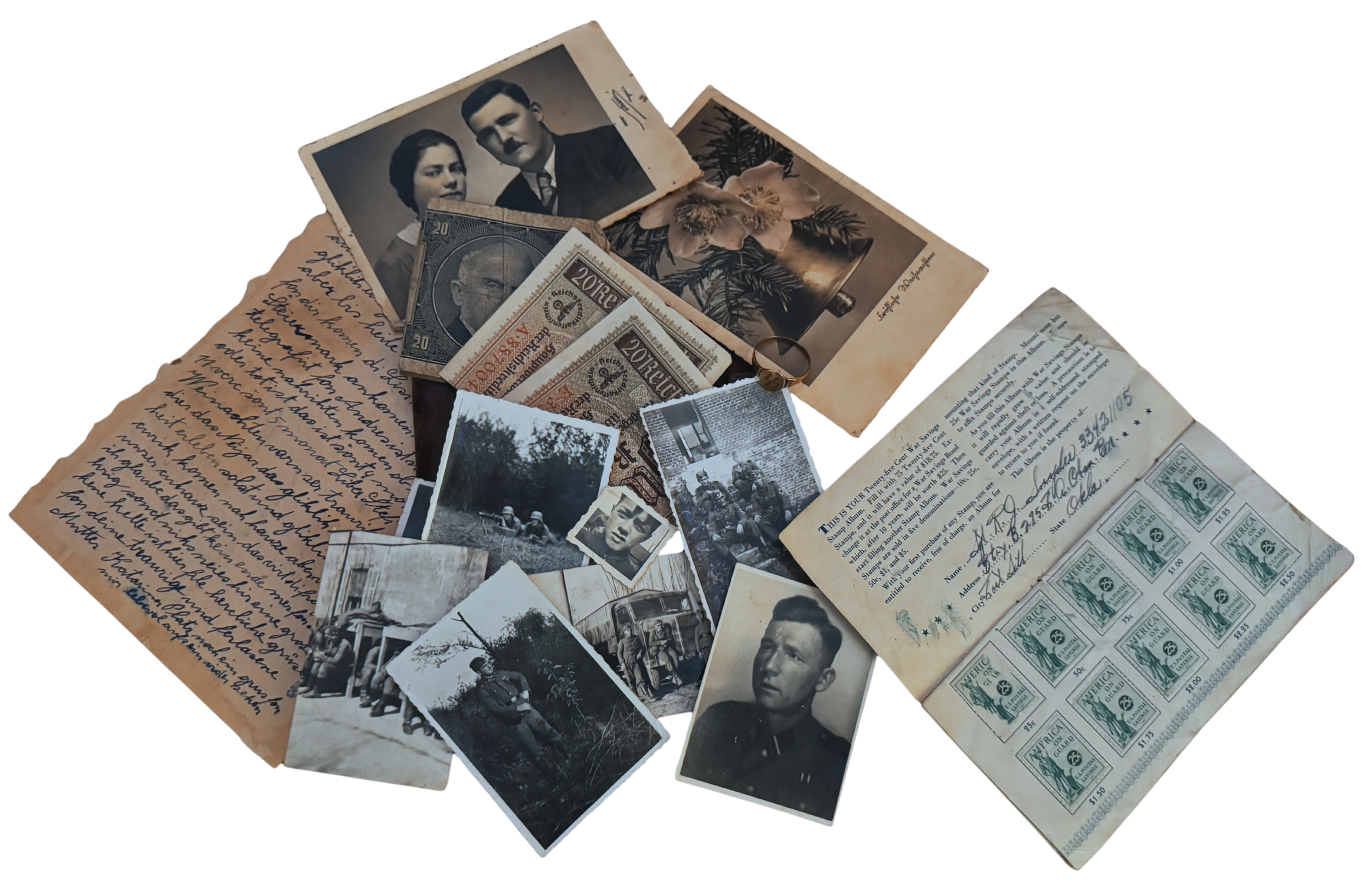
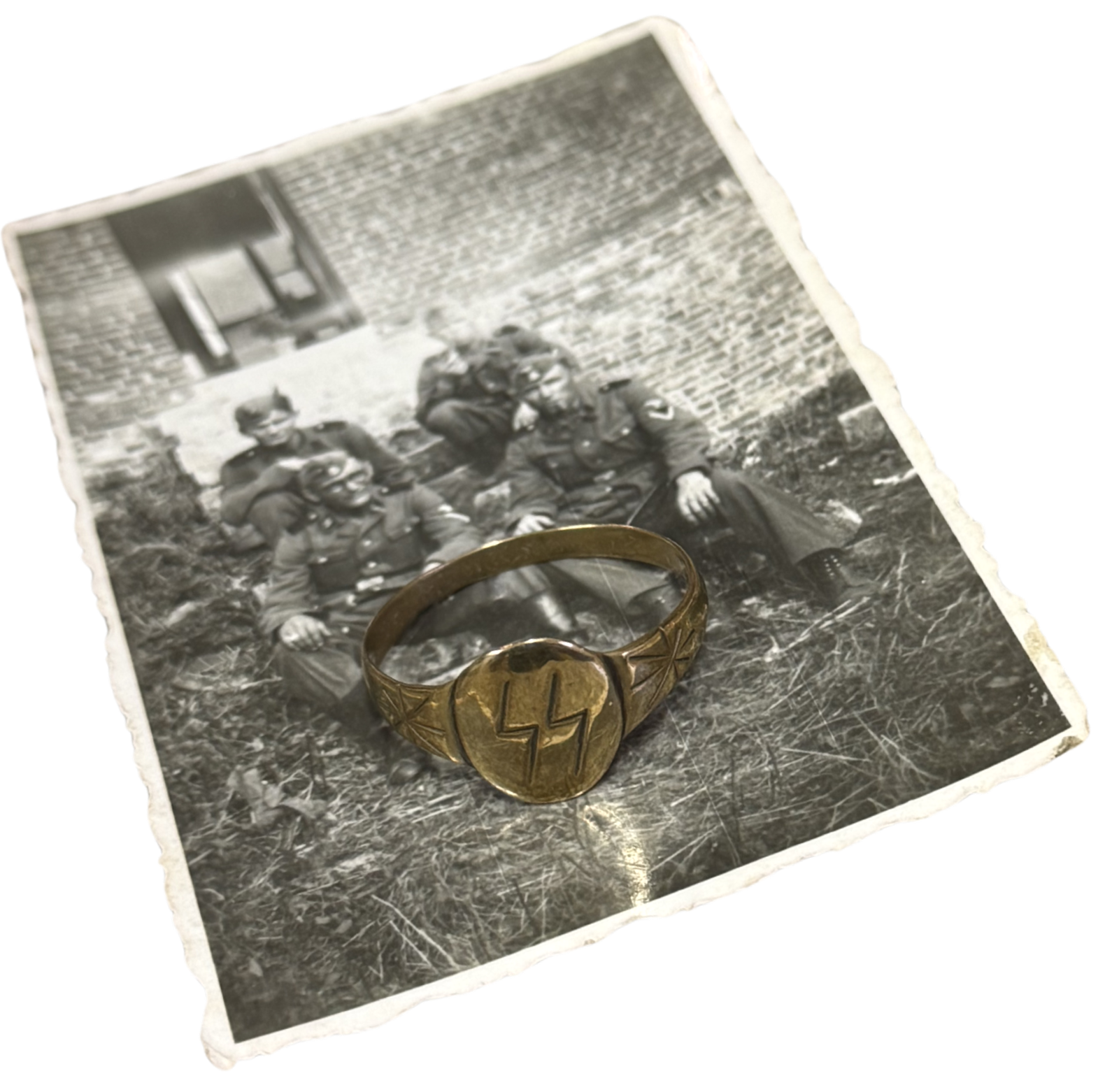
In January 1945, as Allied forces advanced toward St. Vith, Ray recovered a wallet and SS ring from the frozen body of a 9th SS Panzer Division soldier. Inside the wallet was an unexpected discovery—a U.S. savings stamp book belonging to Sgt. Robert Snyder, one of the American soldiers murdered in the Malmedy Massacre on December 17, 1944.
Today, Snyder's stamp book is one of the few surviving personal effects that can be directly linked to a confirmed victim of the Malmedy Massacre, making it an exceptionally rare and poignant artifact of one of the Bulge's most infamous atrocities.
SGT Robert Snyder
(Battery B, 285th Field Artillery Observation Battalion)
Snyder’s body (tagged number 44) was identified and received a full autopsy in mid January of 1945. Personal effects found with his body included a wedding ring, a new testament, multiple loose coins, bills and photographs, but his wallet was absent. Sgt. Snyder had been shot multiple times in his chest.
PFC Ray Fary
Fary holds the SS ring he removed from the body near Saint Vith in 2011 for a photo published in the book Insignia and Artifacts of the Waffen SS by Michael D. Beaver and Mark Bando.
The SS man’s wallet held photos of the original owner wearing the ring as well as letters and Christmas cards from the man’s family.
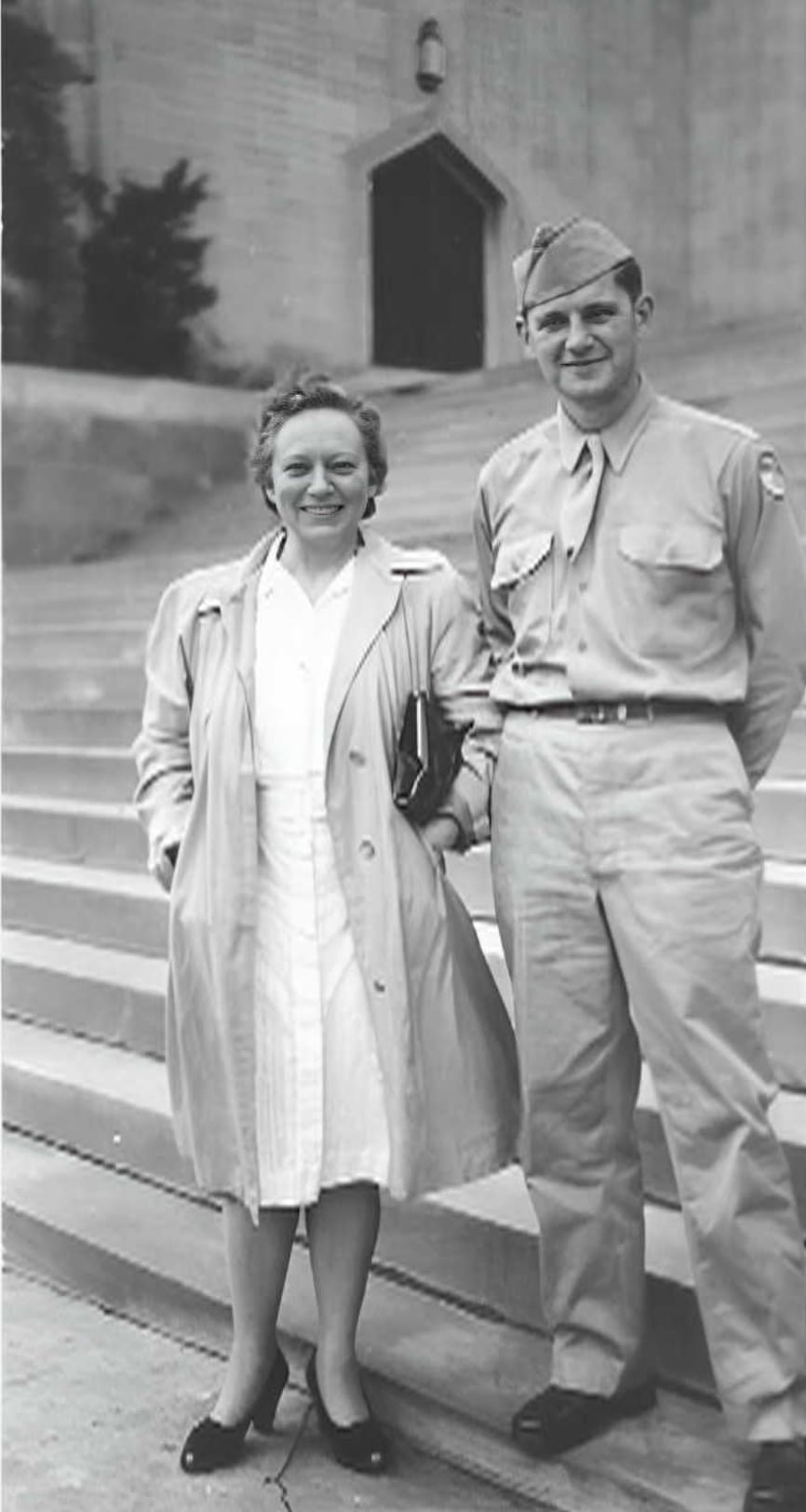
SGT Robert Snyder with his Mother 1943
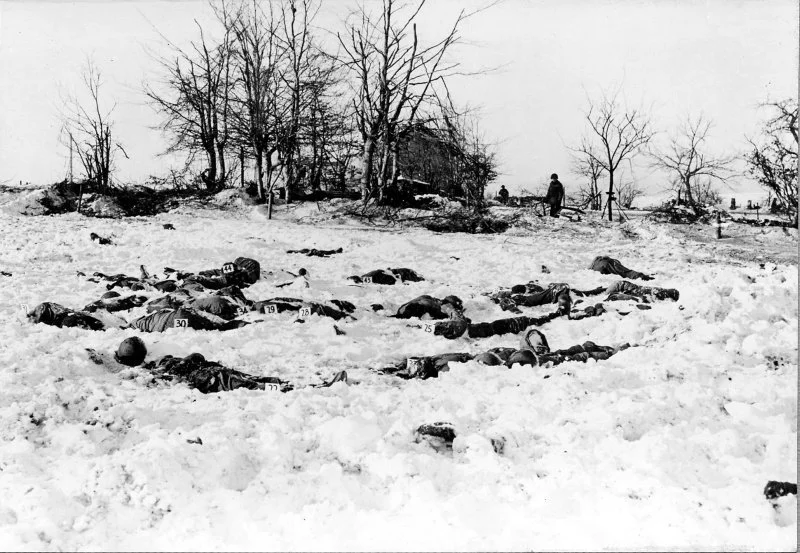
SGT Robert Snyder’s body tagged number 44
In just one day, December 17th, 1944, the leading spearhead SS units executed 11 American soldiers in Wereth on their way to Malmedy, at least 84 American POWS at the Baugnez Crossroads, at least 8 U.S. prisoners outside the Hotel du Moulin in Ligneuville on their way to Stavelot, and at least another 12 American POWS around La Vaulx-Richard near the outskirts of Stavelot.